A Warm Home, A Fair Chance
The lived realities of fuel poverty for children

Fuel poverty is often spoken about in statistics, policy language, or household‑level impacts. Far less visible is the daily reality of what it means for children — how cold, damp and poorly heated homes shape their health, confidence, friendships, and ability to learn — and how schools are increasingly left to shoulder the consequences. This report brings together two powerful strands of new evidence from National Energy Action (NEA): accounts and insights from educators working across primary, secondary and specialist settings, and a companion body of testimony from young people themselves, captured through NEA’s Youth Insights for Change workshops.
Together, these perspectives create a clear picture of how fuel poverty is affecting childhood in the UK. Educators describe the same patterns repeating across classrooms and corridors: pupils arriving cold, tired, hungry or in damp‑smelling clothes; struggling to concentrate; falling asleep in lessons; feeling ashamed or withdrawn; and missing school due to illness or because they cannot face the stigma of being seen as unclean. Young people independently echo these experiences, describing homes that are ‘freezing,’ ‘dark,’ or ‘smelling of damp,’ sharing beds for warmth, eating only no‑cook foods, hiding their home circumstances from peers, and worrying about parents who are unable to cope.
Our research shows that fuel poverty affects every dimension of children’s lives: their physical and mental health; their sleep and nutrition; their ability to participate in school; their friendships and social identity; and their sense of safety, dignity and belonging. Fuel poverty is not simply a housing or income issue. It is a childhood issue — and, as educators repeatedly emphasise, an educational issue.
The findings also highlight the extent to which schools have become the ‘fourth emergency service.’ Teachers and support staff are providing warm spaces, food, clothing, hygiene items, emotional support and crisis navigation, often without resources and often using their own time and money. At the same time, the wider system that families rely on — from local authority early help to housing enforcement and welfare support — is stretched or failing to reach those most in need. The result is a system under strain at both ends: children struggling at home, and schools struggling to catch them.
Crucially, both educators and young people locate responsibility not with children or parents, but with the structures around them: government, energy companies, employers, landlords and regulators. They want action that prevents cold homes in the first place, rather than expecting schools or families to absorb the consequences.
This report sets out the evidence in full — the scale and nature of the problem, its impacts on health and learning, the pressures on schools, and the systemic barriers that keep families trapped in hardship. It concludes with a shared set of lessons and policy implications that speak directly to NEA’s national campaign to end child fuel poverty. At its heart is a simple and urgent message: no child should be cold, hungry, or living with damp and mould — and no school should be left to manage this alone.
What Educators See in the Reality of Child fuel poverty
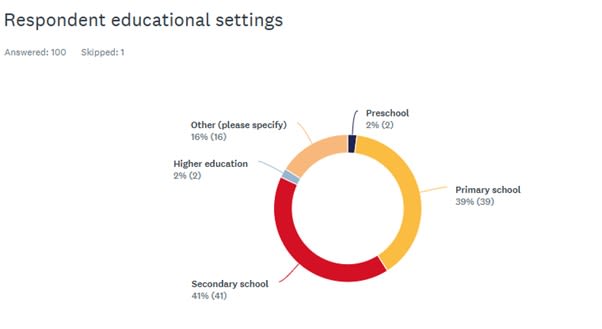
Between Oct-Dec 2025 National Energy Action surveyed 101 educators from across the UK to understand if and how they feel fuel poverty and financial hardship affects the students they work with. In-depth qualitative interviews were carried out with a sub-sample of five respondents representing a range of educational settings. Results paint a consistent picture of how fuel poverty manifests in UK schools. While the survey quantifies the scale of concern, the interviews bring forward the lived experience, revealing how these challenges play out in classrooms, corridors and family interactions. Together, they show a system under strain, where schools are increasingly compensating for rising levels of hardship experienced by children at home.







Cold homes are a cold reality for children
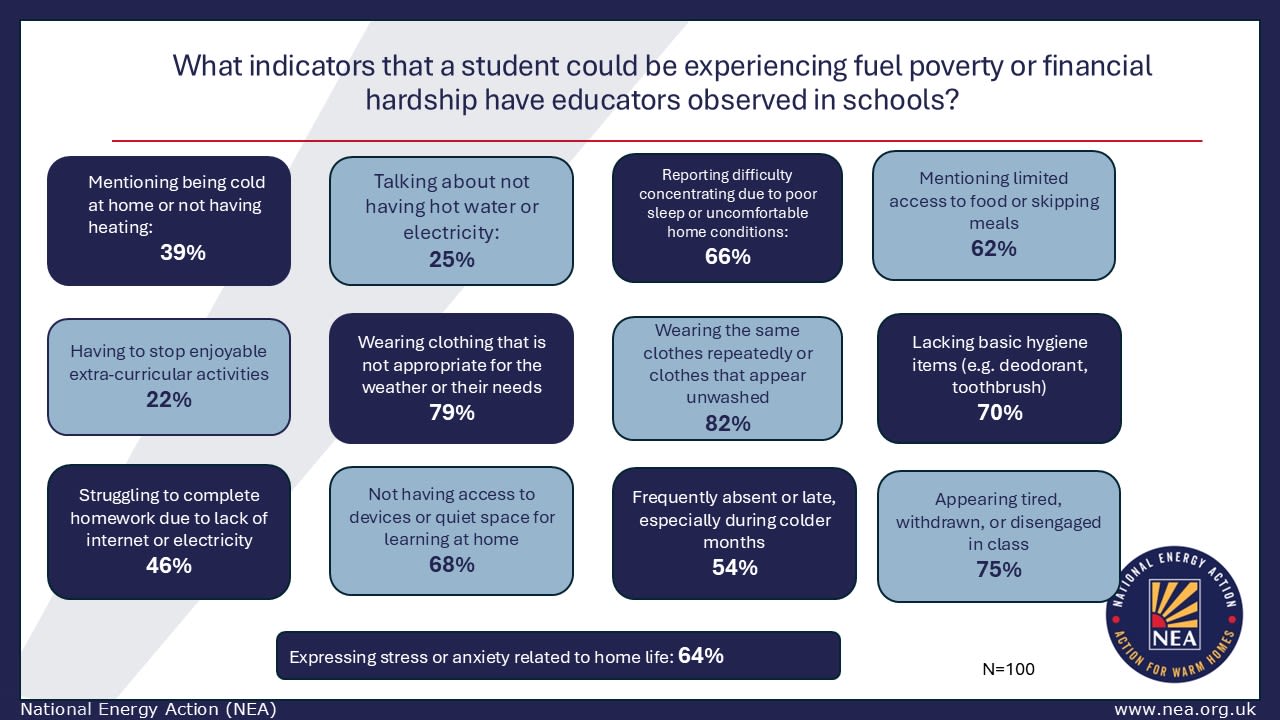
Survey data shows 39% of educators had encountered students explicitly mentioning being cold at home, 25% had seen students talking about not having access to heating or hot water at home. 64% reported stress or anxiety linked to home life conditions. Interviews reveal the lived experiences underlying these figures.
Across all interviews, educators report similar signs. They were all able to give explicit accounts of children talking about being cold at home.
'As an exercise in class, we designed a software system for an automated house. This involved asking students what temperature they would put the heating on. Answers were often very low (0-10 degrees), with some students explaining they wrapped up warm to avoid putting the heating on.’ (Secondary school survey respondent)
This came out in conversations about feeling safe and comfortable:
‘We do a lot of talking around senses, and we often are talking about the fact that, in order to feel safe, we need to feel comfortable. We talk about how we might feel comfortable and, pretty much every time, it comes up that these children talk about wanting to feel warm. That's part of feeling comfortable and feeling safe.’ (Secondary teacher)
It also became visible in the objects and resources that children most craved – items to bring direct warmth to bodies at home:
‘I've got more children talking about feeling cold all the time. Because of them being rural, farmer-type children, they are often talking about feeling cold at home or, “Yeah, so in my room I've got an extra blanket.” Or the amount of children this year, actually, who have mentioned to me they've had a heated blanket. That was one of their requests for Christmas. It's not a normal thing that I would expect children to be asking for.’ (Secondary teacher)
Teachers knew how the spaces children occupy at home can be restricted to living under a duvet in order to stay warm – it’s something they found being openly discussed by children themselves:
‘When it comes to fuel poverty, definitely being able to turn the heating on at home is a big sign. You know, children say that they're cold at home or have to get under the duvet really early because it is really cold at home. Children talk about this and they’ll tell their teachers. So, you do hear from them. It’s not always, “My house is always cold,” it might be, “When I get home, I snuggle under the blanket straight away because it’s nice and warm,” and you kind of get to see why that might be the case.’ (Primary teacher)
Teachers also linked noticing students who were hungry with fuel poverty – not just lack of income at home to buy food, but lack of resources to pay for the energy needed to cook it:
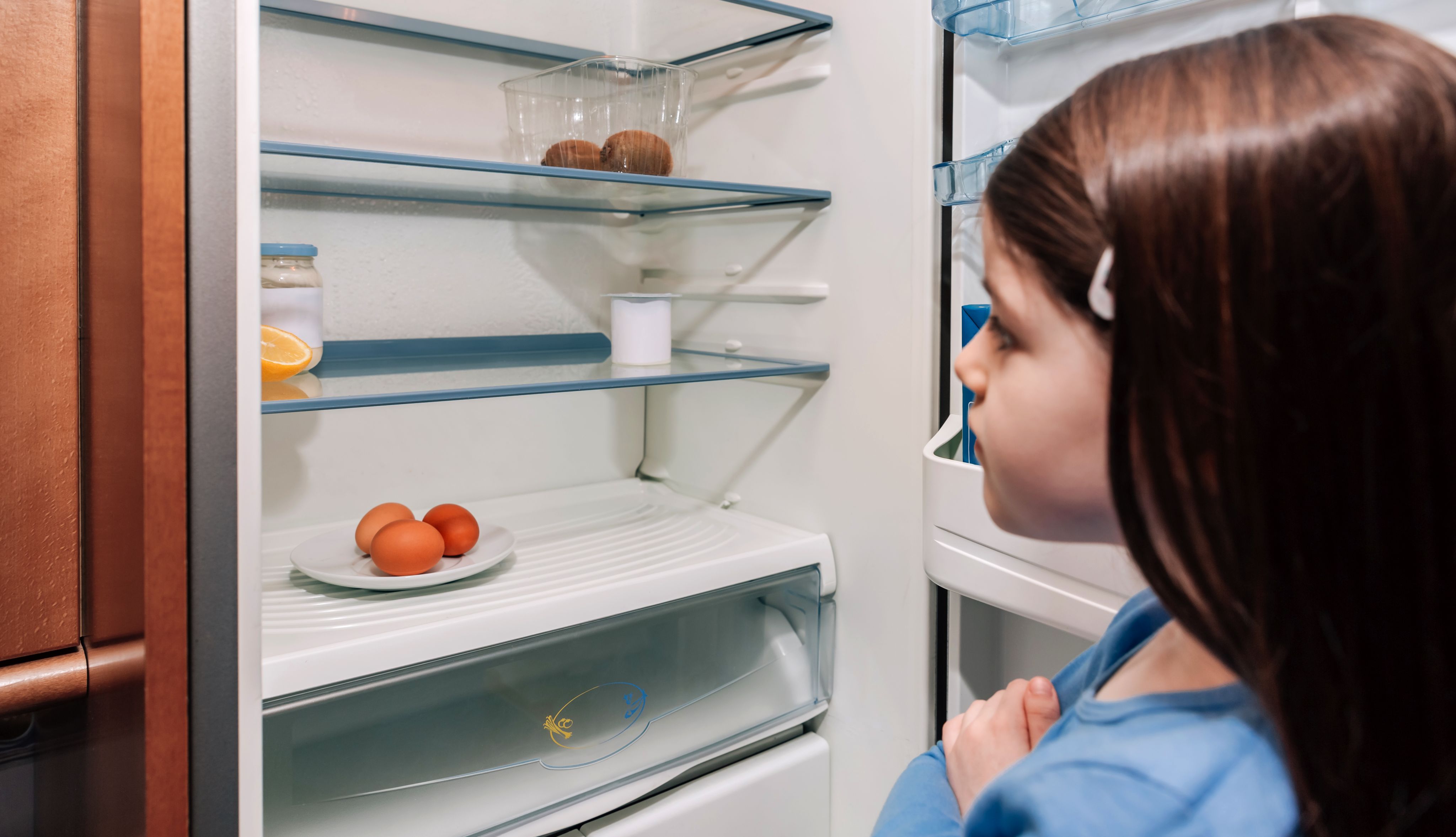
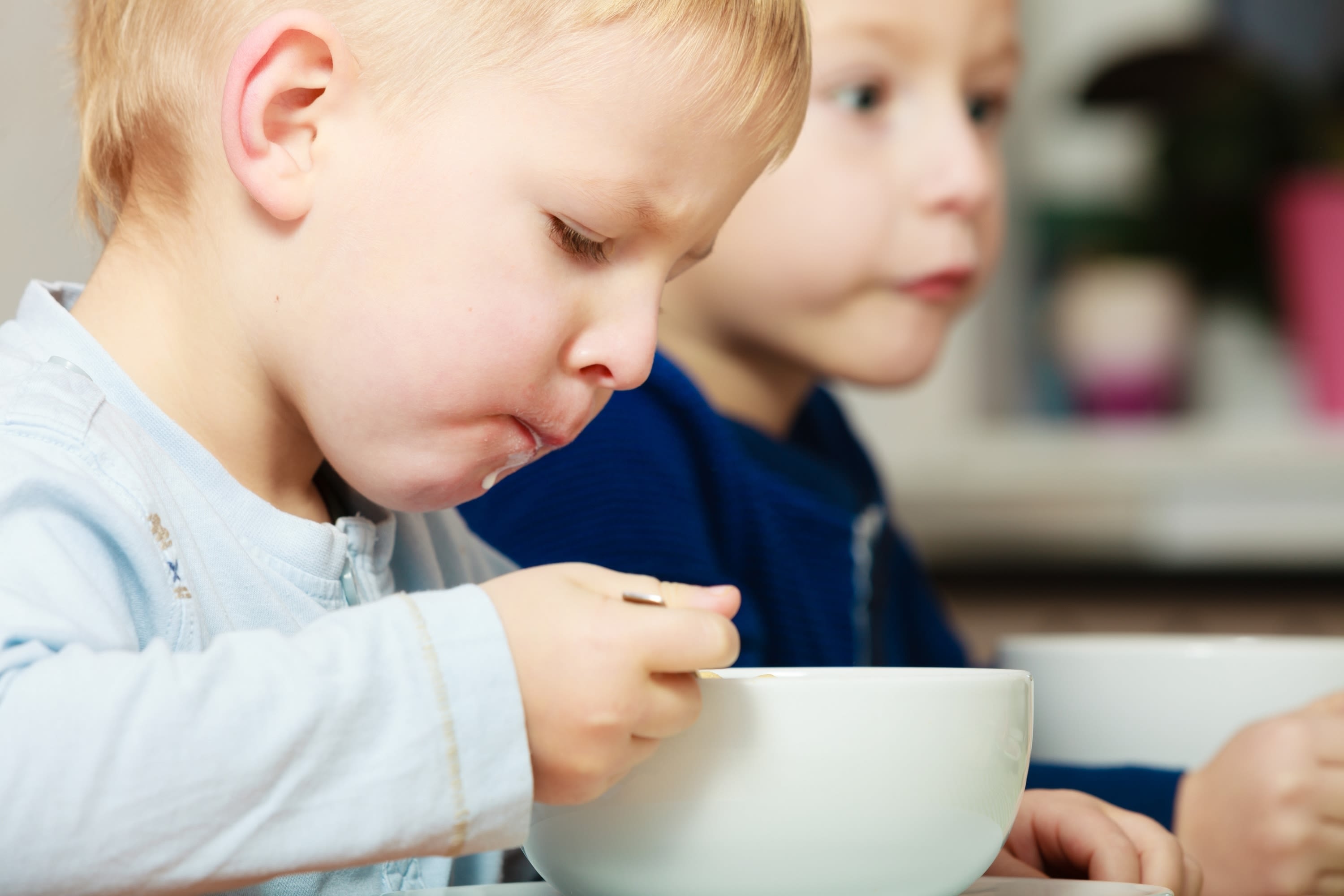
‘Sometimes I worry that they [the children] don’t have a tea [evening meal], or they don’t have very much of a tea, after they leave school. The first thing that I notice, is how hungry the children are. And, again, that could come down to fuel poverty, because maybe the families can’t cook the food without the gas and electricity.’ (Primary school teacher)
‘Kids coming into school, you know, they’ve had no breakfast because, in the home, they’ve got no cookers and things like that.’ (School-based community liaison officer)
They were intimately aware of the realities children faced at home, and the mechanisms parents were often resorting to:
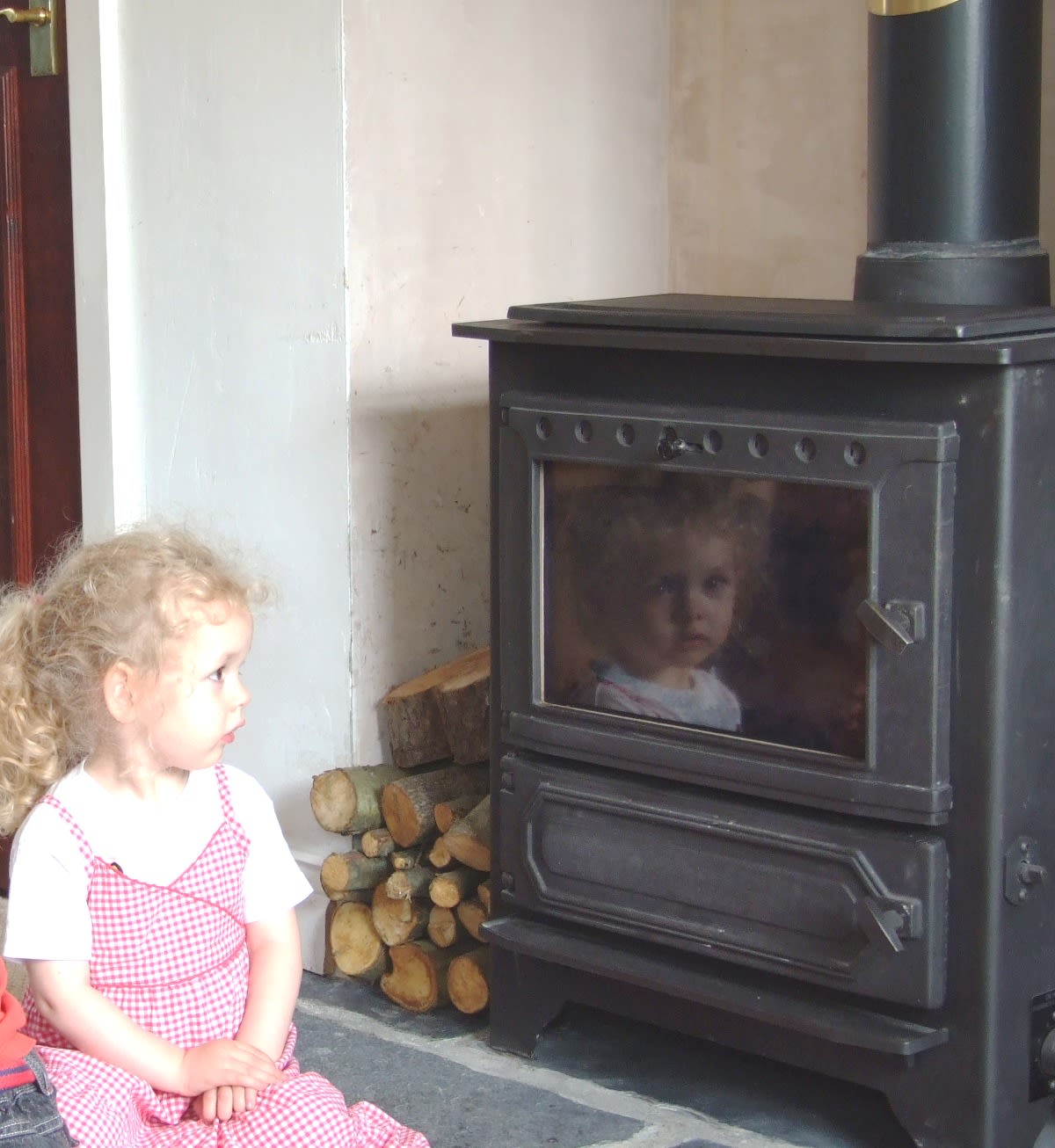
‘I’ve heard from young people who use wood stoves at home, just for mum to save money, they go into the woods and cut trees.’ (School-based community liaison officer)
Combined with insights from our youth insights for change sessions in schools (see below), this points to a concerning emerging finding from the research around children engaging in potentially dangerous activities as a way of coping with fuel poverty – by cutting trees or, in the case of the youth sessions, envisioning fire as an effective coping mechanism. While further research is needed to understand the prevalence of such practices, it directly points to a need to engage and educate children on keeping safe while trying to stay warm.
Clothing, cleanliness, and visible damp
Survey findings reveal widespread recognition of the physical and emotional signs of hardship. Educators report high frequencies of students wearing unwashed clothing (82%), inappropriate clothing for the weather (79%), and lacking basic hygiene products (70%). Similarly, fatigue (66%), difficulty concentrating (66%), and students appearing withdrawn (75%) were commonly observed.
The qualitative interviews echo these numbers.
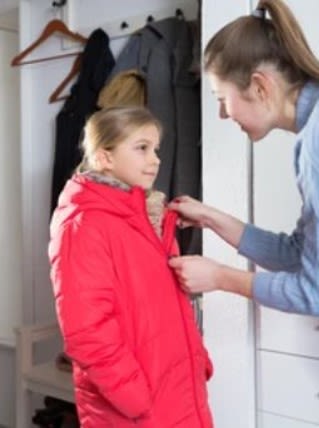
Across settings, staff described insufficient, ill-fitting, or unwashed clothing and the smell of damp as early and reliable signs of fuel poverty. They talked about children in thin coats, no coats, clothes with holes, repeated wear, or clothes that smell damp.
’I see some children that come into school and they don’t have - especially in the cold weather, they don’t have appropriate clothes and they don’t have a hat and scarf and gloves. And I just worry about them so much. Even just the walk to and from school.’
‘Every day, basically, kids are walking into school and they haven’t had their breakfast and they’re freezing cold and they haven’t got the appropriate clothing on. They haven’t got a coat.'
Some explicitly mentioned children coming in with noticeable damp smell, or wearing pyjamas under uniforms for warmth. They also raised visible poor hygiene, including lack of deodorant, unwashed hair or clothes, and dirty collars. They reported seeing students who had limited ability to shower/bathe due to cold homes or lack of hot water.
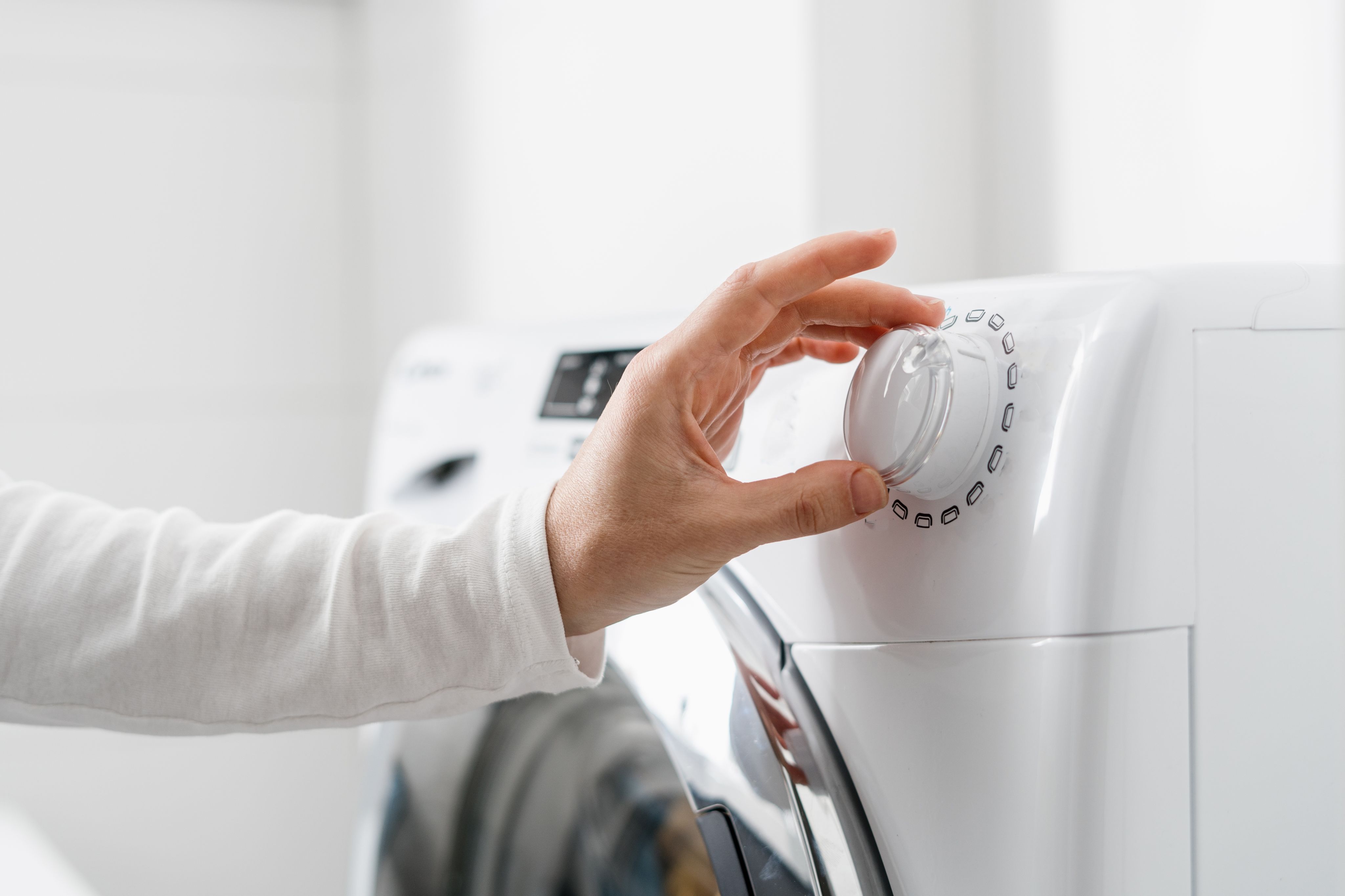
‘They won’t use products to make clothing smell nice, because they can’t afford them. So they will just wash them in a washing machine with no product added’ (Primary teacher)
One primary school leader detailed:
‘We do have children who actually smell damp. So their clothing will smell damp… [some] come very unclean… they can’t heat the home to have daily showers or baths.’
‘They can’t heat their home, so they don’t shower as often or bathe as often.’ (Primary teacher)
Another primary teacher highlighted repeat wear , deterioration and ill-fitting clothes:
‘I notice straightaway when maybe a child isn't appropriately dressed for the weather. Or if they’ve got, like I said, one set of uniform. Equally, when children grow and have a growth spurt all of a sudden, those families might not necessarily have the ability to buy new uniform. So, you might see children that are in pieces of uniform that don’t properly fit. I’ve seen children with holes in their uniforms, because that’s all the uniform that they’ve got at home.’
A deputy head in a Social, Emotional, and Mental Health (SEMH) school described unwashed clothes and improvised layering to stay warm:
‘We have kids with pyjamas on under their uniform, we’ve noticed that recently. There was one student whose mum said that when he gets out of bed in the morning, he keeps his pyjamas on to stay warm, because it’s so cold.’
They directly related this to energy:
‘We had a lot of parents that were applying for crisis funds to top up their energy cards. So, we’d hear a lot of stories from kids who were unable to wash their clothes, kids with dirty collars and kids who were smelly a little bit. And there were a lot of them that were quite unkempt. And we’d sort of say, “Is everything alright? Did you have a shower this morning?” It was, like, “No, because we’ve got no hot water.” I’m, like, “Why, has the boiler broken?” “No, because there’s no heating,” or something, “Because mum hasn’t topped up the meter or the energy card.” So, we had a lot of that, that started coming up.’
62% of survey respondents reported students skipping meals or having limited access to food.
All educators repeatedly linked hunger and tiredness to fuel poverty, describing children who arrive desperate for breakfast, fall asleep in class, or cannot focus. School staff talked about children arriving extremely hungry, eating multiple breakfasts, or lacking food at home. They described working-poor families struggling despite employment. They noticed some children who are reluctant to get out of bed because staying under a duvet is the warmest place in the house.
‘I’ve seen children…desperate for breakfast… their main meals are breakfast we give them and then their lunch.’ (Primary teacher)
‘When I’m… advising in schools, you see the kids falling asleep. Their attention span is zero… this child hasn’t had breakfast.’ (School-based community advice officer)
‘We’ve had children who have fallen asleep in class… we’ve carried them through to our nurture room and let them sleep.’ (Primary teacher)
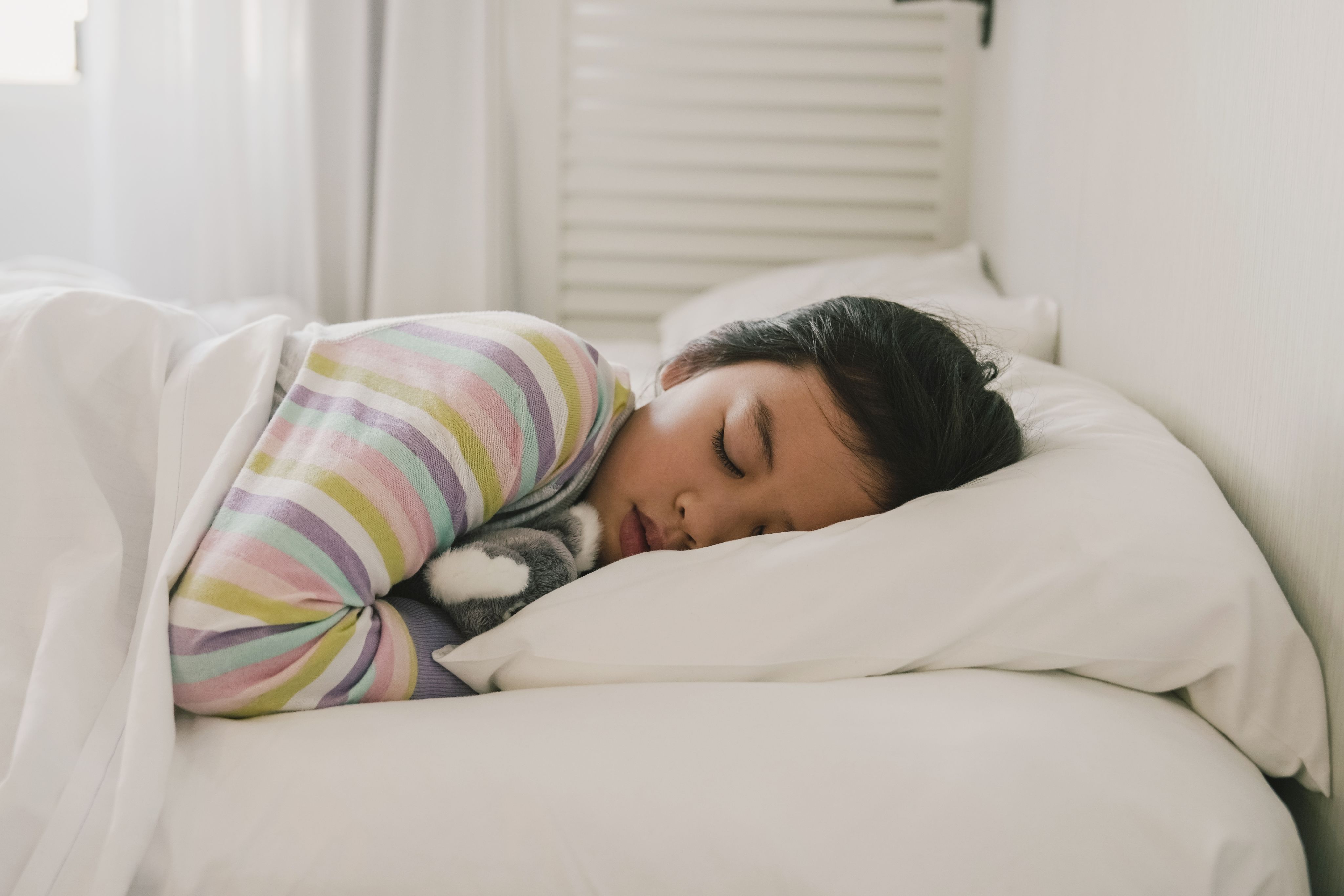
A striking theme was that of children not wanting to leave a warm bed for a cold home. One primary respondent described how: ‘A specific child said, ‘I just didn’t want to get out of bed because I was really warm in bed and the house was cold.’’
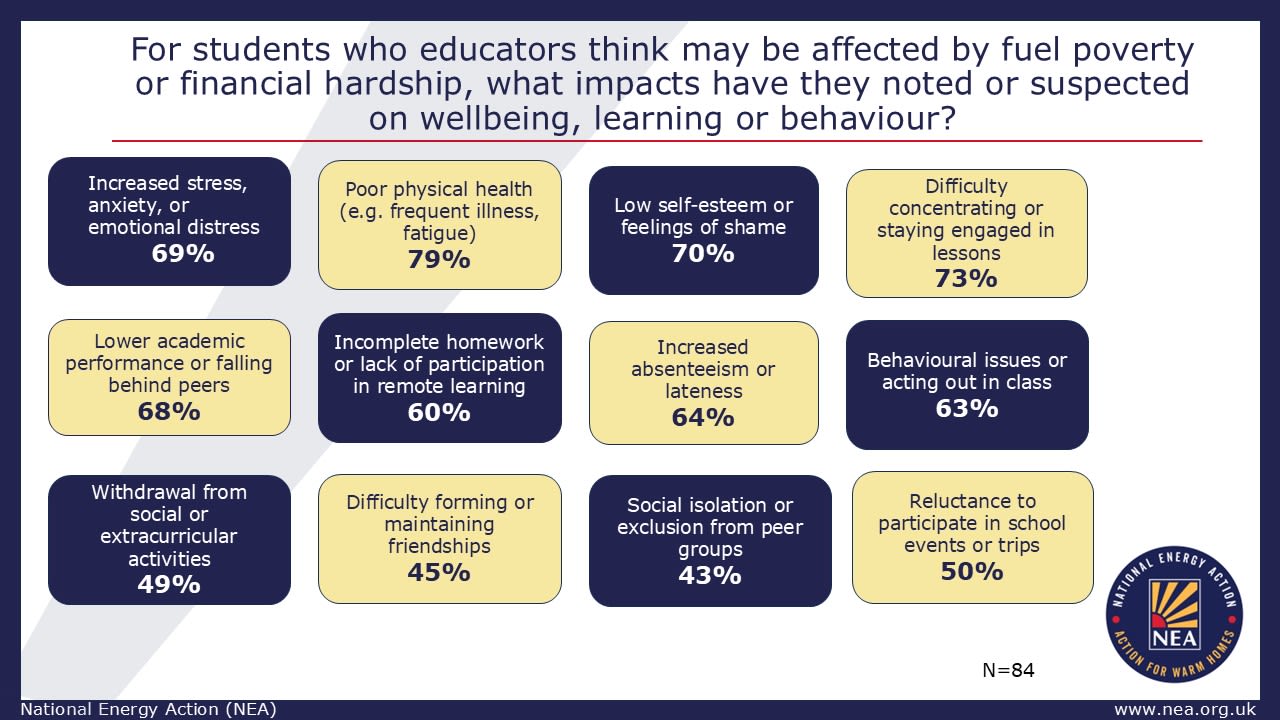
Survey respondents overwhelmingly associated fuel poverty with lower academic performance (68%), difficulty concentrating (73%), and behavioural issues (63%).






Impacts on Physical and Mental Health
79% of survey respondents reported poor physical health among students affected by fuel poverty. Interviews illustrated how the structural housing issues behind fuel poverty become embodied in children’s health and attendance.
Health impacts of cold homes mentioned by educators included:
- Increased coughs, colds, chest infections, bronchial issues.
- Mould exposure causing respiratory problems (teachers explicitly referenced widespread mould in children’s homes).
- Fatigue from poor sleep and cold living conditions.
- Mental health concerns: anxiety, stress about finances, distress at home environment.
Educators in interviews widely link fuel poverty to worsening educational outcomes:
- Low concentration levels due to hunger, cold, lack of sleep.
- Falling behind academically, especially after absences from cold-related illness.
- Worsening behaviour due to dysregulation and stress.
- Long-lasting attainment gaps, particularly after school holidays when conditions worsen at home.
Several teachers emphasise that children must overcome these barriers before learning can begin: regulation, warmth, food, safety, and emotional stability.
Teachers consistently emphasise that basic needs (warmth, food, sleep) must be met before learning. When this isn’t the case, they see students with fatigue, withdrawal, anxiety, and tearfulness. They notice difficulty concentrating, reduced engagement and acting out or disruptive behaviour (sometimes misinterpreted until the underlying hardship is known).
‘If they’ve gone home and maybe they haven't had a warm home, they haven't had a decent meal, they haven't got appropriate clothing, it’s then impacted, from the moment they’ve left school, all the way through to when they get back to school. And they are dysregulated, and they are worried and they are anxious. And then they can’t concentrate and they can’t learn. They almost need that extra love and support from the adults that are in school, knowing that they are struggling with these things at home. And then you have these children that go through months and months and months of this, of feeling like this, potentially their entire education. So, they're always that kind of one step behind, right from the beginning.’ (Primary school)
Survey responses and interviews converge on the reality that fuel poverty doesn’t merely impact academic outcomes indirectly: it actively prevents children from being ready to learn.
Educators described how fuel poverty affects attendance (illness, lack of sleep, cold mornings). They described:
- lateness (linked to cold mornings)
- absences, often associated with illness from cold/damp housing
‘We noticed there was a spate of absences. And they were often off with bronchial issues. So, kids who had chest infections or bronchial stuff, like throat stuff. And we’d do home visits, as part of that, and we would go round to some of these houses, and you would see - you know, you’d be in there with cold air coming out of your mouth. And the amount of damp that we would see.’ (SEMH school)
Survey findings identify increased absenteeism (64%), lateness (54%), and withdrawal from social activities (49%) as common impacts.
Interviews provide clear explanations:
- Illness due to cold/damp homes leads to frequent absences.
- Lateness occurs because leaving bed means entering a freezing home.
- Social withdrawal is driven by embarrassment about clothing, hygiene, or home conditions.
‘We’ve had children who actually are physically ill. It has impacted on the pallor of their skin. Runny noses all the time, because they’re coming from very cold homes. Coughs. More coughs. Colds. Parents are bringing them into school rather than keeping them at home, because they can’t keep them warm at home. So they bring them into school because they know we can. And they know we will feed them. So we have children that actually are attending school unwell. We’ve got a nurture room, so we are very lucky, for them. In those instances where they’re unwell, they can come into the nurture room, where it’s warm. And there’s blankets. And there’s settees for them to lie on and things. And we make sure that they’re warm, and they’re fed, and they’re clean. Obviously, we monitor them medically as well.’
One rural secondary teacher noted a noticeable spike in sickness and attendance drops, which they attributed partly to cold/damp housing. They connected cold, older housing stock, and respiratory illnesses, while also highlighting the fact that teachers and educators themselves may be experiencing similar situations to their students at school.
'From my own personal experience, we’ve had major problems with mould in our [own] house… A lot of our children, they live locally, and they're in the same kind of house as me. I know that their parents will be experiencing the same kind of issues as myself, and I know that the mould has caused us to feel unwell at home. We've had repeated problems with coughs, and colds, and things like that, and flu, and chest infections.’ Teachers linked damp and mould to illness and absence. An SEMH deputy head recounted a home visit:
‘We went to go and visit one student, he was Year 8 at the time, and we’d not seen him since September… And we went round. And I remember we took photos of it – and we had permission from the family – and the walls were just black with damp. I’ve never seen anything like it in my entire life. We were just, like, “We need to get out, because we’re going to get sick, as well.” And they had younger siblings, who had the same issues, but spent a bit more time with her dad, so wasn’t off as much as the brother was, because of family relationships.’
Educators described how fuel poverty contributes to anxiety, withdrawal, and shame. 69% of survey respondents reported seeing students experience emotional distress, anxiety and stress. 70% had noticed students with low self-esteem and shame. One teacher explained how children hide home life to avoid stigma:
‘I think sometimes it [fuel poverty] pushes children to guard their home life a little bit, so that it’s not seen by their peers.’ (Primary teacher)
In particular, they noticed how that sense of shame or stigma can stay with a child, affecting how they experience major life transitions, such as starting secondary school:
‘As they get older and as they work through to getting ready to go into high school, they sometimes push away their friends. You know, if they know what their home life is like, they want to push them away. So they can almost start afresh, I guess.’
A rural secondary practitioner added that the lack of branded items heightens social anxiety:
‘Some of these children, their parents are financially unstable, they're not getting, like, the branded clothing or the big presents and things at Christmas. We know that that is adding to the social experiences these children are having and what their peers are saying to them. It's the peer acknowledgement of, “Oh, you're poor. You don't have money,”. They're the kind of children that would talk to me about not feeling very warm at home, etc. It all plays into that same pattern of it causes social anxiety, and that seems to be a major factor for children coming into school at the moment… it's more the social anxiety that comes with the peer pressure, and wanting to fit in and feel like you're like other people in school.’
At the same time, educators highlighted the compassion and resilience they see displayed by the children, and the solidarity that can be found in their peer-to-peer networks. Displaying an awareness held by children of the circumstances that their friends may be suffering, and an awareness that those circumstances are something that needs to be ‘made right’ in whatever means available. In schools, that can play out through everyday kindness and generosity.
‘Children are so understanding and so loving and so caring, that then they want to kind of help the other person. You know, I’ve had children that say, “So-and-so doesn’t have a pencil case, and I’ve got two at home, so I’ve brought in a pencil case for them.’ (Primary teacher)
The emotional toll and mental health impacts of experiencing fuel poverty at home were felt to be heightened by teachers as students approached school holidays:
‘I think they come to depend on school and I think, especially when it’s the lead-up to school holidays, there are children that really struggle with that. Knowing that they're not going to be in a warm place where they're going to get fed every single day of the week. Well, obviously, Monday to Friday.’ (Primary teacher)



Schools as the ‘fourth emergency service’
Survey respondents emphasised the need for funding (77%), access to meals/clothing/hygiene products (75%), mental health support (61%), and clear referral pathways (69%). All educators interviewed described schools now acting as the fourth emergency service.
‘My school is seeing an increase in families relying on food parcels and the household support fund grants to afford essential living costs. Some families are too embarrassed to ask so staff are having to spot the signs and initiate conversations with parents.’ (Primary school respondent)
Common school-based provision spanned food, warmth, clothing, and hygiene:
- Free breakfast clubs
- Snacks throughout the day (often funded personally by staff)
- Uniform banks/spare uniform
- Food parcels, holiday hampers, emergency groceries
- Washing clothes for students
- Nurture rooms/warm spaces with blankets and sofas
- Referrals to food banks, fuel banks, crisis grants, Citizens Advice
- Quiet spaces for anxious or hungry pupils.
School being the place where children access food, and how hunger otherwise risks become all pervasive to their day, was apparent in accounts from teachers:
‘We have children here who due to them being hungry, we know that it’s harder. We’ve got a high percentage that are on free school meals. But they are still continually hungry. So we have a free breakfast club as well they can attend. Our lunchtime staff are really good at noticing if a child needs extra, so they give them extra. The same at breakfast club. If they need an extra bit of breakfast, they will have an extra slice of toast. Or we will give them fruit to supplement. Or they will get an extra big portion. We provide snacks, as well, throughout the day. Staff tend to do this out of their own money. They have snacks in the classrooms. So they will purchase snacks that the children can access. Because they will go to the teaching staff and say, “I feel really hungry,” or, “I've not brought a snack today from home.” And the teachers will provide them with that.’ (Primary school teacher)
Teachers repeatedly spoke about using their own money to supplement food provision for children who come to school hungry: ‘We have just started a breakfast club… a few of us, including myself, we’ve put a bit of money – you know, we’ve put our hands in our pockets a little bit.’
‘One of the things that I know I do, and I know other staff in the school do it, and we're not told to, but we have pupils that we're aware that they've come into school and they've probably not had breakfast. Or they don't have money on their account to get lunch money, to get anything at lunchtime or breaktime. So, one of the things I do is I always bring, like my colleagues in my department… we bring in, like, packet pastas, noodles, cereal bars, dilute juice or whatever, just so we've got additional things on offer in case we have pupils that turn up and they haven't got anything to eat. Like I say, it's not a school policy. There is no budget for these kinds of things, but we do that because we care about the kids. Quite frankly, these kids aren't going to be able to get on and do their lessons if they're hungry, and they are thirsty, and they can't think of anything else but that. Between us we'll provide support to those that need it.’ (SEMH teacher)
Some talked about how they will wash uniform for children who need it: ‘We wash uniform if we have to.’ Others described how their schools had to act as a uniform bank, to ensure children could be appropriately dressed for school:
‘I know a lot of schools – and ours, in particular – do give children uniform, and they get fresh uniform, and you can see that they're very happy to get that, because it’s brand new and it’s theirs.’ (Primary school teacher)
For some children, this could be the difference between being able to wear suitable clothing or not:
‘We have spare uniform at school, and we very often have sent packs of uniform home for kids who you notice their uniform is falling apart. It's threadbare, so we just go, “Here you go. Take this home,” done.’ (Secondary teacher)
Schools are absorbing responsibilities previously held by:
- Social care
- Local authorities
- Health services
- Family support services
Staff repeatedly mention that this was not the role they were trained for, but they feel morally compelled to fill the gaps.
‘I think I try to think ahead a little bit, as well. You know, thinking about, when I’m going into school in the morning, if it’s a frosty day and it’s cold, which children are going to have struggled with that, and are going to need that little bit of extra TLC. So, even before thinking about my teaching and my learning, and all of the other jobs that I have to do as a teacher, I’m definitely always thinking about those individuals that I know are going to need that extra support. There are still big gaps, where there are families that don’t qualify for help. And we don’t obviously want to see children struggling, and the impact that has on the children. So, we try to kind of fill that gap.’ (Primary teacher)
Staff frequently signpost or broker access to: foodbanks, fuel vouchers, Citizens Advice, white goods schemes, and local authority crisis grants. Also, to put them in touch with the water companies for support reducing their tariffs.
‘I refer people to [charities] for benefits and fuel poverty advice and for fuel vouchers… we do surgeries every week.’ (School based community advice officer)
‘Often parents will come and they will say, “I can’t wash the clothing because the washing machine has broken down. I can’t afford the repair.” In that instance, we have previously accessed a white goods scheme to get new appliances for the homes. Parents will come and they will be tired, and the children will be tired, because of [lack of] food. They can’t afford food. So we’ve done foodbank referrals and given vouchers for families. Food hampers. We’ve given food hampers out. Our families that we know that are in regular hardship, if we’ve got milk left at the end of the week we would give them the milk. And parents are very grateful for any help that they can get.’ (Primary school teacher)
Their accounts demonstrate the importance that being able to connect children and parents/carers with the support they need directly from within school is essential to securing positive outcomes and supporting the wellbeing for the entire family, and how for some households, schools and teachers may be the trusted organisation that they reach out to, looking for help:
‘We will have those conversations with families, and say, “Look, it’s alright.” We have sent communications out to parents where we say, “If you are struggling, you get in touch. We can refer them to different organisations or to the local authority for crisis management. We have a family liaison officer, and he also deals with supporting families with food bank stuff. And we get food bank deliveries, so we then also pass that on to families. We are always saying to parents, “Whatever you need from us, there’s nothing to be… We don’t pass judgement here, if you're struggling, you tell us. So, it’s kind of, like, building up the culture where we say, “Yeah, we are here to support you.” (SEMH school)
‘I've been through [different organisations] to get food vouchers, to get vouchers for gas and electric to put on their meters, because they tend to have meters.’ (Primary school teacher)
They also spoke about how directly educating children on energy efficiency and financial resilience in school can help to support families and embed potentially cost-saving behaviours at home too:
‘We try and teach the kids about batch cooking, we do a lot of that, to sort of - you don’t have to cook every night, so you don’t have to keep using the same thing [appliance]. Stuff they can microwave, and all that. So, we try and think about what the context of our intake is, and how can we sort of help them manage with what they do?’ (SEMH school)

Emotional Burden and Professional Strain on Educators
Survey results show, for educators:
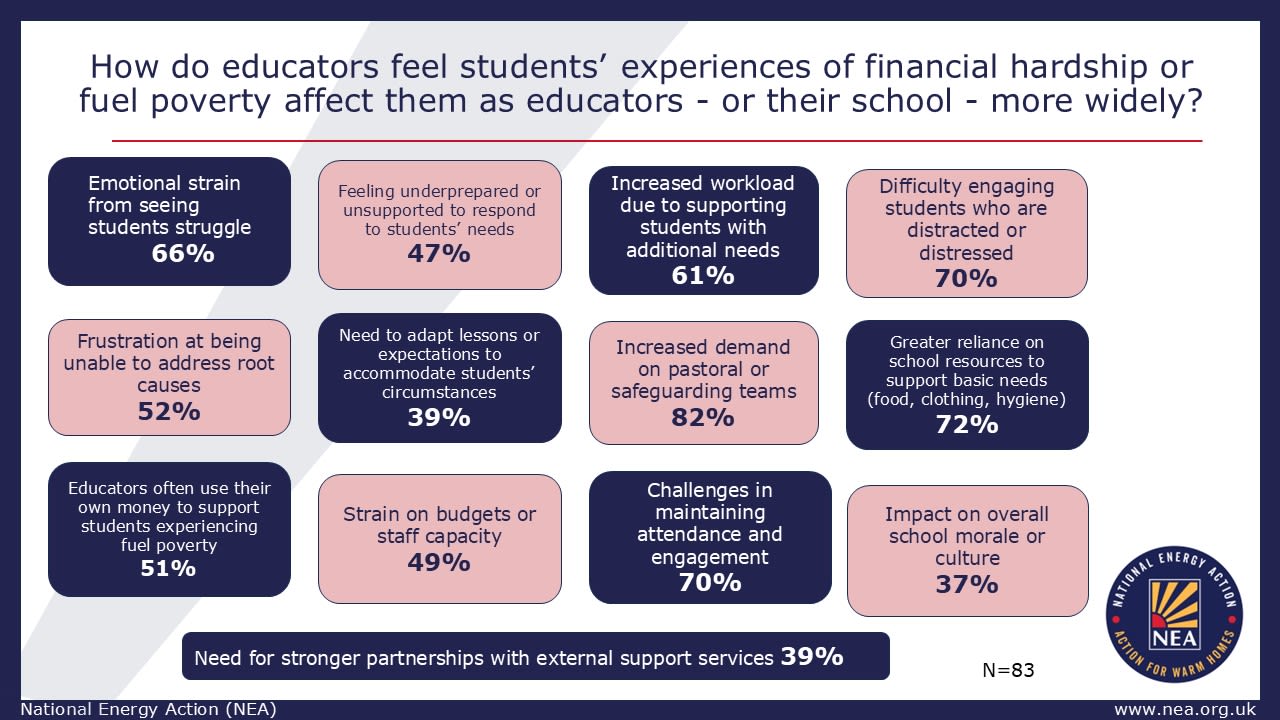
- Emotional strain (66%)
- Increased workload (61%)
- Greater reliance on school resources (72%)
- Educators using their own money (51%)
Interviews reveal the depth behind these numbers. Every interview reports significant impact on educators’ wellbeing. Educators described worry, guilt, and burnout, alongside personal spending and expanded roles.
‘This gets worse and worse every year. We as teachers come home and cry about it. Schools have no money to support those children either academically through buying glue sticks and new books or personally to provide them with a winter coat, gloves or a toothbrush. Teachers then spend their own money on these children but that often impacts our own finances and frequently we will then we have to choose between heat our home this weekend or give our 32 kids some extra snacks or buy a specific child a pair of gloves etc. I know what 99.9% of us would choose - those children. I used to sometimes bake cakes for special occasions for staff and purposely bake too many so that I have a reason why I’m giving my children extra food on occasions. One child hid under my desk to try and pinch a cupcake when he saw that I came into the classroom and hid them in the cupboard for a staff member’s birthday. I already knew about his home life so knew exactly why he was hiding next to the food. We all have hundreds of stories like this and most people outside of education are completely oblivious to this or don’t realise the severity. We are crying for help, and so are those children.’ (Primary school respondent)
‘It increases the emotional burden on you, as well, if you're taking those worries home with you after teaching the whole day, and obviously thinking about that when you begin your teaching every morning.’ (Primary teacher)
Educators reported:
- Emotional distress: teachers going home and crying, worrying about children over weekends.
- Moral injury from being unable to fix root causes.
- Financial strain: many use their own money for food, hygiene items, uniform, or school activities.
- Extended responsibilities: doing the work outside the scope of their roles – more in line with the work of social workers, counsellors, nurses, and community workers - and feeling overburdened as a result.
- Exhaustion from high levels of safeguarding work.
‘My role as a deputy head here is I’m in charge of teaching and curriculum, but a lot of my time is taken up with social workers meetings, and going to Tesco, to get food for the kids. I’m at Lidl every night, getting stuff for breakfast club the next day. You know? I wasn’t doing that before. I enjoy it, you know, because it means the kids are going to be fed and watered, but it does take its toll. It makes you question everything you thought you knew, and your sort of trust in government and the ability to take care of people in the social state. And it makes you quite embittered towards any sort of political party. It won’t get fixed.’ (SEMH teacher)
Some express guilt about having warm homes while the children they teach do not.
‘It has definitely affected me personally, in the sense that I worry so much about some of the children. Like, I just want to take them home and show them what a home can be, what a family can be, when there’s not that constant pressure and worry of money and where the next meal is going to come from.’ (Primary teacher)
‘I guess there’s guilt, where, like, I go home and my baby daughter is warm in her bed, and I feel incredibly lucky.’ (SEMH teacher)
All five educators described clear increases since:
- COVID
- Cost-of-living crisis
- Rising energy costs
- Inflation on food essentials
Many state explicitly that:
- The situation is getting worse.
- More families who were previously coping are slipping into hardship.
‘Even those that would maybe five years ago have been seen as more affluent are now themselves struggling. And it’s making it a lot worse.’ (Primary teacher)
- School budgets are shrinking at the same time that needs are rising.
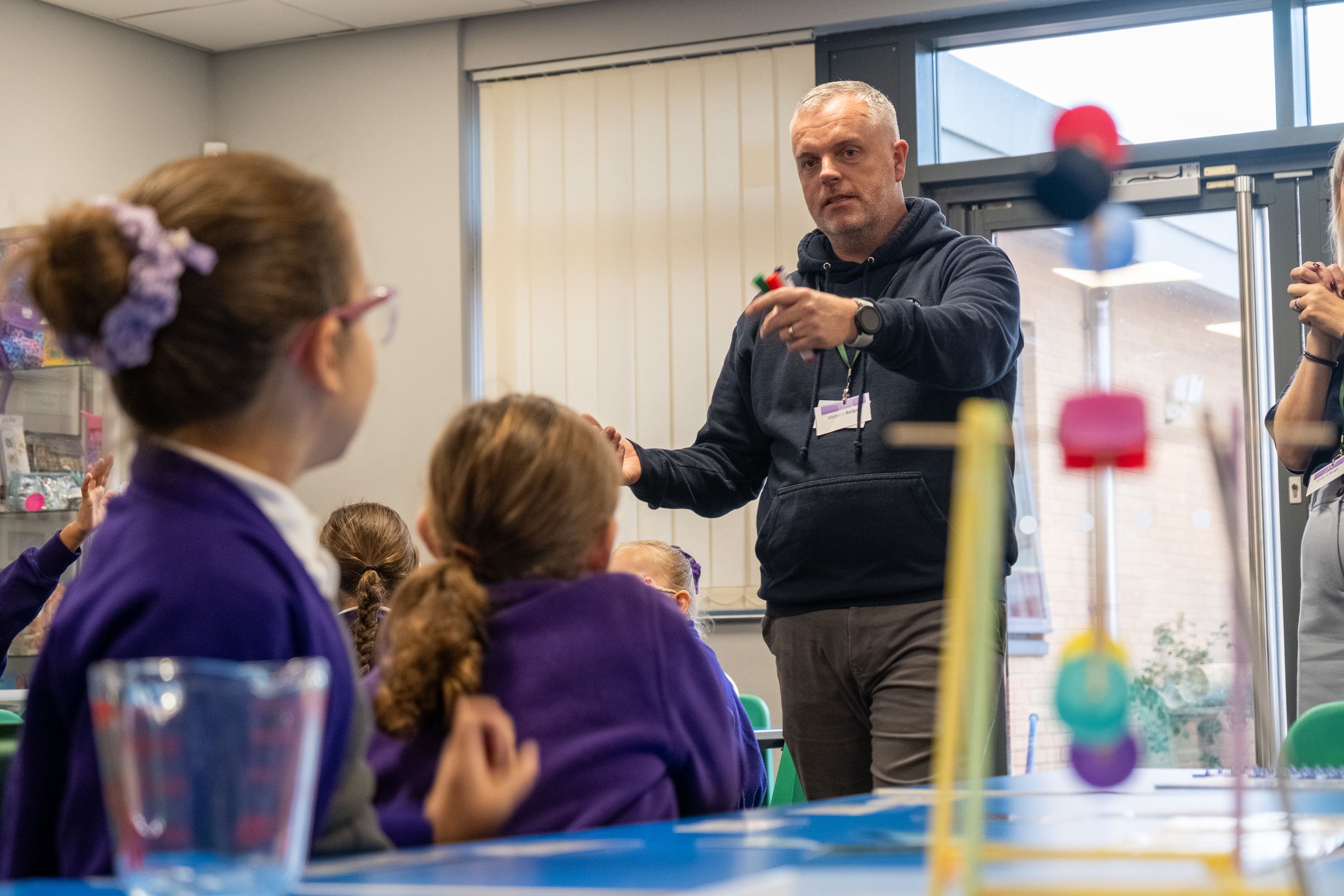
‘ I’ve been teaching 13 years. It’s moved from just delivering my subject in a class to being all the other sorts of roles that I’m not paid to do. We’re not leaving at 3:00 because we’ve got social workers to meet with, or we’ve got an Early Help meeting or a child protection meeting, or on the phone to Citizens Advice. Or I’m with a Somali parent with a Somali member of staff, who’s translating for me, so we can get them the right support. It has become the norm, for this level of my job now, that that’s what I do.’ (SEMH teacher)
Systemic Barriers and Inadequate External Support
Educators consistently raise concerns about cuts to early help, youth services, community development roles, and social care, leaving schools to pick up the pieces.
‘When we sort of see kids, who can’t really help it, look emaciated and sad and stuff. It does take its toll, because you feel like you wish you could do more for them, but you're sort of limited in terms of what you can do.’ (SEMH teacher)
‘When the local authority is in debt, they haven’t got money to give to families. That’s why we’re having to put our hands in our own pockets. Unless the local authority helps us, there’s not much we can do. All we can do is make sure that we’re keeping them warm here, when they're in school. We just do it off our own back, you know?’ (SEMH teacher)
They also highlighted how underfunded schools have no capacity to expand breakfast clubs, tutoring, pastoral teams, etc.
‘As a school, we're struggling to be able to heat the school adequately. The room I work in is often quite cold. Not to the point where we can't work in it, but it makes it unpleasant then for children to come in and spend time there, for me to sit work in it throughout the day.’ (Rural secondary teacher)
‘With the rising cost of things, we don’t know, as a school, if we will be able to continue free breakfast club, because we’ve got so many children that attend…but it is so desperately needed.’ (Primary teacher)
‘Community development officers in deprived areas… they’ve taken those out. They haven’t got any anymore. So who is going to direct people to the help they need?’ (School-based community advice officer)
Teachers reported feeling invisible and let down by the wider systems, which are failing the children they work with:
‘People who don’t work in education don’t realise we buy things for other people’s children to feed them and keep them clean. We also encourage them to join as many clubs as possible because they will be warm and fed in school.’ (Primary school respondent)
Despite this, teachers and educators feel morally compelled to get support for children and their families however they can:
‘We just do it because we sort of have to, it’s just become the role. We just crack on with it because, if we don’t, our kids will get sick and they will leave with no GCSEs, and they will end up being in a cycle of poverty. So, unless we break that cycle, those kids will live in it forever.’ (SEMH teacher)
They discussed the families they had seen who were unable to access support due to:
- Language barriers (EAL)
- Illiteracy among parents
- Stigma/shame
- Navigating complex systems
- Broken or slow landlord/LA repairs
- Prepayment meters running out
- Caring responsibilities of young carers
‘One family we had seen, the family with the damp… We’d send the mum letters and reminders about things, but then it turned out she couldn’t read. So, I’d send her voice notes via WhatsApp. So, I’ve sometimes wondered, what if she was getting bills sent through, and red letters and advisory letters, saying? And maybe bailiff letters, who knows? She could have just ignored them because she couldn’t read them. So, what are we doing for families who cannot read these letters?’ (SEMH teacher)
‘Another parent was clearly on the autistic spectrum, as were both of her sons. And I remember being on the phone with her one day, I said, “Look, I’ll send you an email about it.” She went, “Don’t send me the email because I can’t read it.” So, they're getting all these letters and emails from people about appointments and… We might have helped them apply for something at Citizens Advice, or had that conversation, and then they get a response and they can’t read it.’ (SEMH teacher)
They noted language barriers faced by parents:
‘We have a lot of children where English isn't their home language. And we have parents that don’t speak English at all. So, if you're quite new to the country and you’ve got to set up your accounts, how are you going to navigate a website, to get your name on the bill? How are you going to be able to select the right tariff for your house, if you can’t understand the website and it doesn’t have Somali translation? It’s little things like that, where access to support is not there because of either illiteracy or a language barrier. So, it’s really hard when you have these meetings with them and you just know that what you're saying, the majority is going straight over their head because they don’t understand what you're telling them. So, we have a lot of that, where parents just felt, I guess, quite lonely because they couldn’t… Or they were stressed because they couldn’t get the right support, they didn’t know where to seek it or how to go about it.’ (SEMH teacher)
Others talked about how young carers were felt to be at additional risk due to the pressures or responsibilities placed upon them:
‘You’ve got kids who are classed as young carers in environments like that, in deprived areas. But these are children, that don’t know how to prioritise and how to check the boiler pressure or to cook a meal.’ (SEMH teacher)






What changes do educators want to see?
Across contexts and phases, our findings show that fuel poverty has become an everyday, visible part of school life, with clear pathways from cold, damp homes to poor health, reduced readiness to learn, and lower engagement and attainment. Educators consistently described the same constellation of need — hunger, tiredness, unwashed or damp-smelling clothing, anxiety, and withdrawal—and the same downstream effects: illness-related absence, lateness, behavioural dysregulation, and falling behind. Survey and interview data reinforce one another: fuel poverty is not a peripheral issue schools occasionally encounter; it is a structural condition shaping daily classroom reality.
At the same time, schools are absorbing roles once held by social care, health and community services—running breakfast provision, uniform and hygiene support, warm/nurture spaces, and acting as the de facto gateway to food banks, fuel vouchers, crisis grants and whitegoods schemes. This is mission critical for pupils but fragile for schools: the same staff who keep children warm, fed and learning are spending from their own pockets, carrying heavy emotional and financial loads, and working in buildings that themselves can be hard to heat. The system is under strain at both ends—in homes and in schools.
Crucially, need is deepening and widening. Educators report post-COVID escalation and the spread of hardship into families that previously coped, while entrenched deprivation is intensifying. Practical barriers—parental illiteracy, language barriers, stigma, digital hurdles, landlord/LA delays, and prepayment disconnections—prevent many households from accessing help without a proactive, trusted intermediary. In this landscape, schools are the most consistent and trusted touchpoint for families, and therefore the most effective launchpad for timely fuel poverty support.
‘No child should be cold, hungry or have no electricity.’ (Primary school respondent)
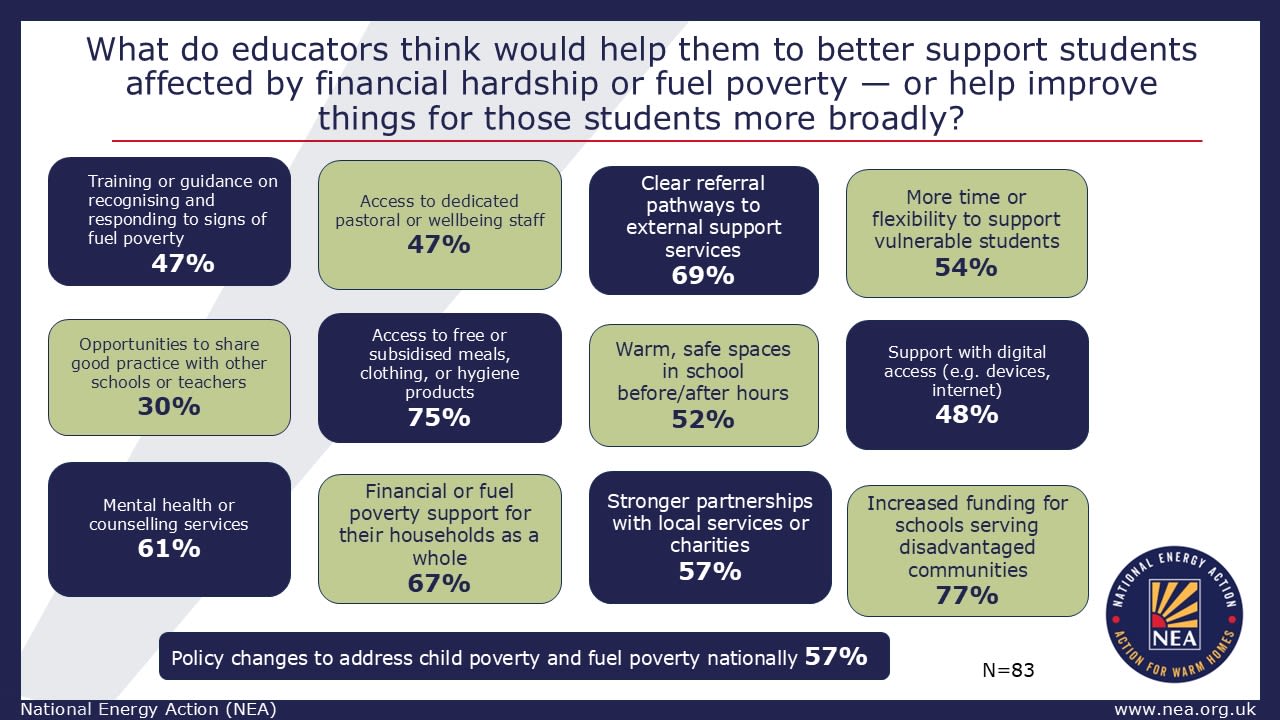
The educators we spoke to want:
- Clear referral pathways to external support (69%)
- Financial/fuel poverty support being made available which takes a whole household approach (67%)
- Increases to funding for schools in deprived areas (77%)
- Warm, safe spaces in school before/after hours (52%)
- Access to free or subsidised food, clothing or hygiene products (75%)
- Stronger partnerships with local services or charities (57%)
- Action at national level (57%)
‘I for one feel if we invest in an extended infrastructure of family hubs within these deprived areas it would be of great benefit. These can provide integrated support to children and families, particularly in the early years and primary years. This would be an extension to the school where a wraparound service can be provided to parents and young people. In my experience these one-stop shops work as it looks at the family as a whole and works with all the difficulties they have. This then becomes a familiar service which people trust and can adapt to within their own community.’ (School-based Community support respondent)
‘More needs to be done to fix the cause of these issues rather than react to symptoms. There is also a lot of shame linked to these issues. Parents and students are often unwilling to report such things. Therefore, there should be more channels on now to report these to save face and avoid embarrassment’ (Secondary school respondent)
Youth Insights for Change: What do children say?
This section of our report synthesises learning from a “Youth Insights for Change” workshop delivered at a secondary school in an area of England with a high local rate of fuel poverty and other indicators of deprivation. The workshop involved students from Years 7 to 11. It draws on:
- Live observations from National Energy Acion facilitators,
- Reflective notes from the session lead, and
- Detailed written responses from student workbooks, including sections where young people highlighted experiences that relate directly to their own lives.
It sheds light on how children understand fuel poverty, how it impacts their daily lives, wellbeing and learning, and how they view responsibility and potential action. Taken together, the observational notes, facilitator reflections, and extensive workbook evidence reveal a compelling and multifaceted picture of how children understand and experience fuel poverty.
Young people:
- Can clearly identify complex impacts once supported
- Understand structural drivers
- Feel the deep emotional and social consequences of cold homes
- And hold a strong sense of justice about who should act
They bring a grounded, powerful, emotionally resonant voice to the issue. The insights they provide will inform National Energy Action’s child poverty campaigning, programme design, and further youth engagement.
Children’s Understanding of Fuel Poverty
At the beginning of the session, students overwhelmingly equated fuel poverty with cold homes. Their early responses centred on heating systems, insulation, radiators, double glazing, and warm bedding. Workbook drawings consistently depicted features like radiators, heated floors, ‘thick walls,’ and draught excluders.
- Students initially strongly associated comfort at home with energy efficiency features such as air conditioning, insulation, and draught excluders, more than with basic household items.
- One discussion focused on whether air conditioning is cheaper than heating, suggesting a need to ensure work with students can address common misunderstandings about energy.
- Many were unfamiliar with major concepts like net zero, the role of Ofgem, EPC ratings, or National Energy Action’s wider work.
- A student expressed that reading energy bills is ‘for adults’, reinforcing the perception that energy is not something young people need to understand.
Guided questioning expanded understanding to whole‑home energy
Students began by equating comfort with heat (warm rooms, blankets). Through Q&A they broadened to energy across the home, especially cooking (microwaves, kettles, instant noodles) and hot water for showers and laundry.
Through discussion (‘What makes a shower hot?’ ‘How do you wash clothes?’ ‘What appliances do you need for cooking?’), students began making connections between energy and daily life and moving beyond surface symptoms (cold) to interconnected daily functions (hygiene, school readiness, social life). Incorporating relatable routines (cooking, showering, laundry) rather than abstract concepts (tariffs, EPCs) helped start discussions to bridge those concepts.
Workbook responses reflected this shift, including references to:
- Cooking appliances: ovens, microwaves, stoves
- Refrigeration: fridges and freezers
- Washing: showers, washing machines, dishwashers
- Lighting: electricity for homework, safety, and comfort
- Functioning infrastructure: boilers, water systems
Perhaps most strikingly, students connected energy with food insecurity. Across workbooks and verbal discussions, young people mentioned reliance on microwave meals, ready meals, and instant noodles - and how food banks now request no-cook items to support people who cannot afford to use ovens or hobs.
This reveals a level of latent awareness: even when students cannot articulate energy poverty broadly, they instinctively recognise the connections between energy access, diet, and health.
Emerging systems awareness
As confidence grew, students began identifying structural causes:
- Cost-of-living crisis
- COVID legacy impacts
- Unemployment
- High energy bills
- Energy debt
- Unaffordable tariffs
- Poor insulation
Their analysis was rarely individualising or blaming - children clearly perceived fuel poverty as a result of economic and social conditions rather than poor personal choices.

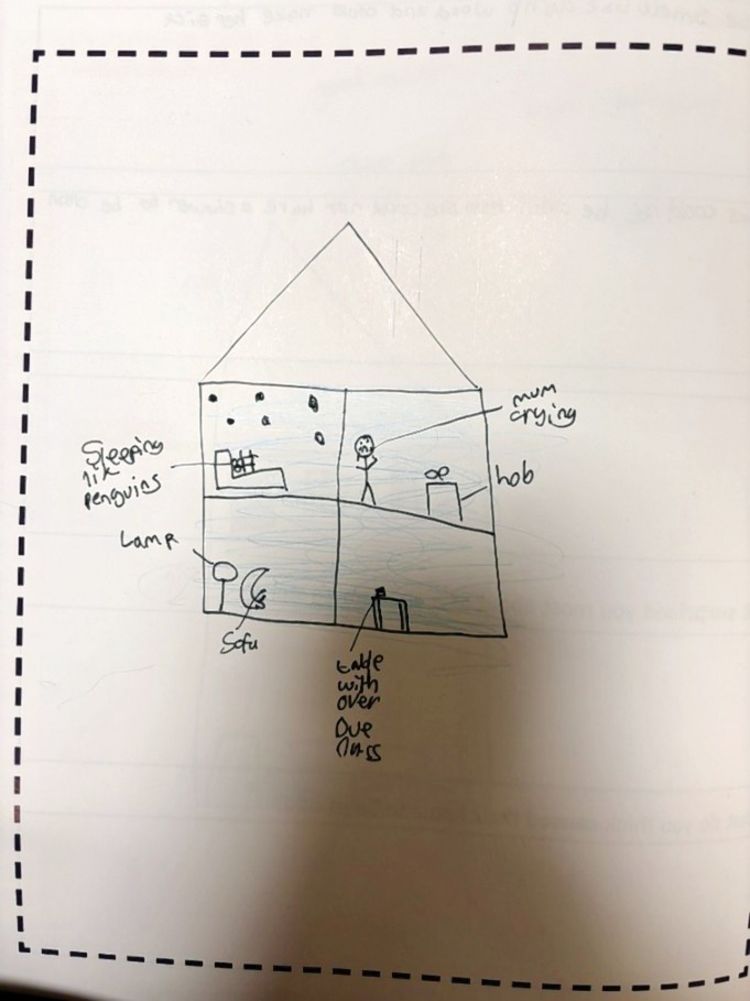

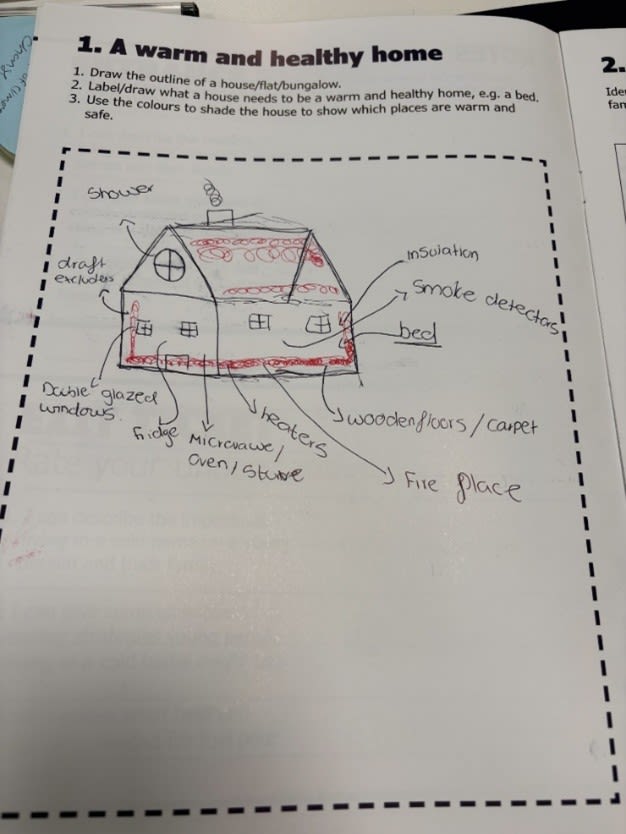
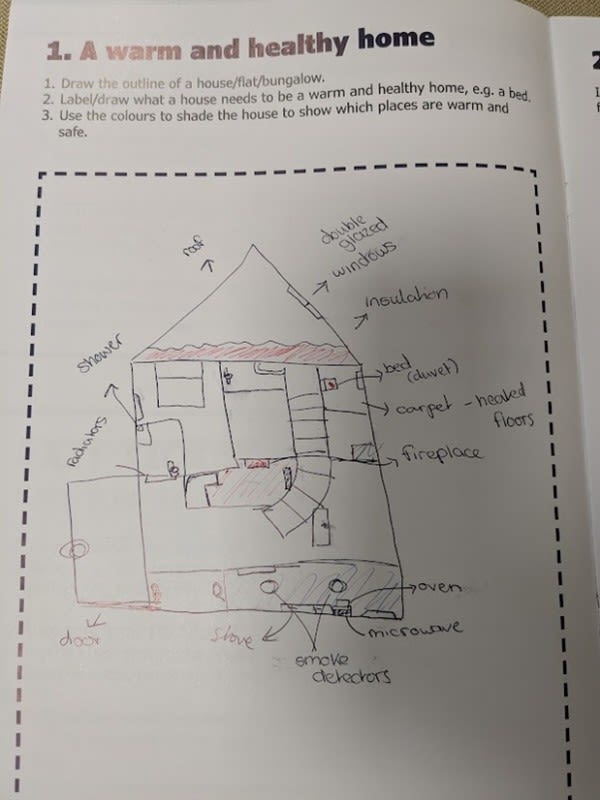

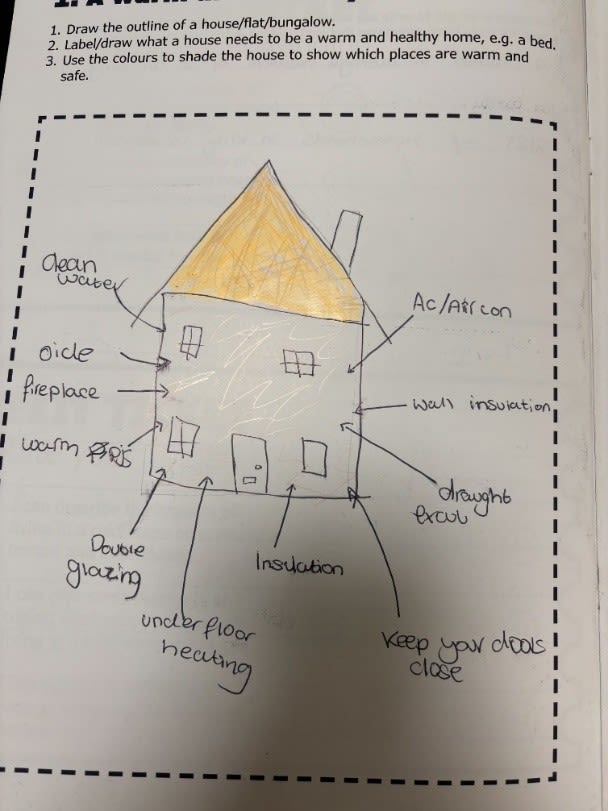
Impacts of Fuel Poverty on Children – As Seen by the Students
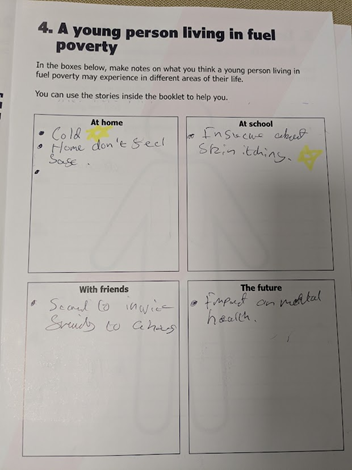
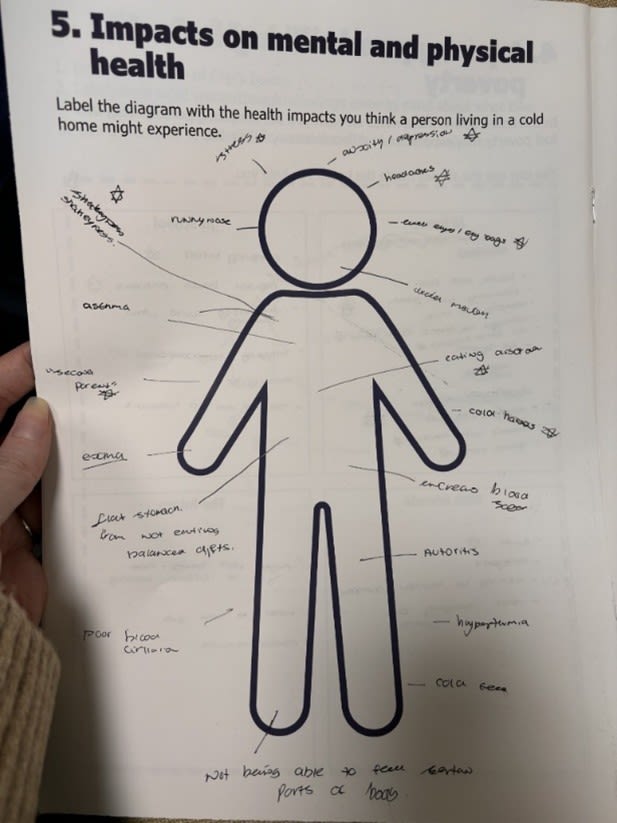
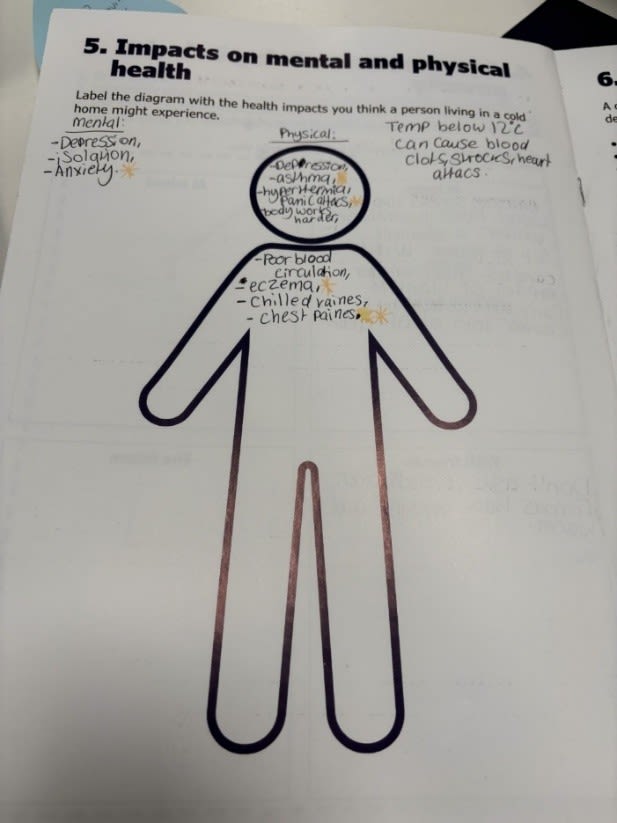
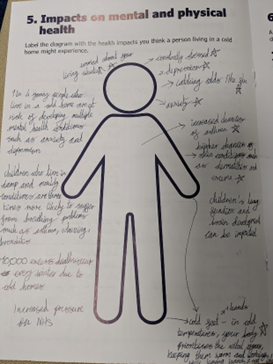
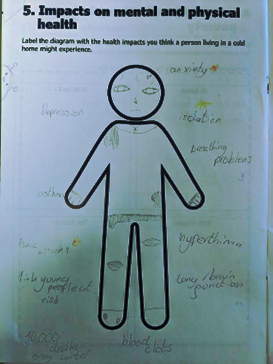
Insights from the workbooks provide a vivid, detailed picture of the lived reality facing some children, ranging from physical conditions to emotional strain and behavioural consequences. Several workbook entries included yellow/star highlights—the strongest indicator that children recognised these impacts in their own lives.
Students easily identified a wide range of immediate impacts of cold homes:
- Physical health: feeling cold, increased illness, worsened respiratory issues.
- Emotional and social effects: fear of being mocked by peers, shame, and stress.
- Family disruption: sharing beds with siblings or parents.
- Material deprivation: loss of comfort, lack of privacy.
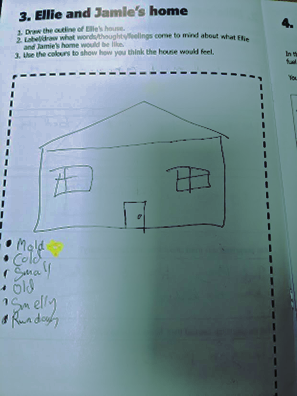
Students consistently described homes affected by fuel poverty as:
- ‘Cold,’ ‘freezing,’ ‘dark,’ ‘run down’
- ‘Smelling of damp wood’ or ‘smelling bad’
- Featuring ‘black mould,’ ‘damp patches,’ ‘wet walls’
- Having heating turned off or one working radiator
- With broken boilers or single glazing
These physical descriptions are directly linked to health concerns, but also shape everyday choices: children sleeping in one room, spending time in bed for warmth, or avoiding home altogether.
Several workbook entries highlighted that mould, cold, or shared sleeping arrangements were personally familiar to children, describing:
- Damp patches in bedrooms
- Sharing rooms with parents
- Homes which are not well insulated
- Not having child support
- Struggling to feel warm at home
- Problems with the house
- Black mould
- Being in debt
The topic of food emerged spontaneously and strongly.
- Students linked energy poverty to the inability to cook proper meals and limited cooking options.
- They understood why families rely on microwavable foods or no-cook meals. This indicates that students see fuel poverty as a barrier to healthy eating, not just heating.
- Some referenced ‘no cooker,’ ‘no fresh food,’ or ‘mum saves money by not cooking’ when discussing how fuel poverty might affect daily lives.
Impact on hygiene and self-presentation: once prompted, students quickly recognised that:
- No hot water means no showers,
- Broken or unused washing machines mean unclean clothes,
- Cold homes contribute to bad smells, mould, and damp on clothing.
Students directly linked this to:
- Embarrassment
- Bullying
- Avoiding school
- Feeling ‘not like the other kids’
Many described staying in bed under covers as a heat-saving strategy and avoiding being at home (spending time at friends’ homes or clubs) to keep warm - pointing to displacement and loss of family time/shared spaces.
Workbook responses repeatedly mentioned:
- Not inviting friends home
- Fearing judgement of a ‘cold, smelly, mouldy’ home
- Feeling left out
- Spending time at friends’ houses to avoid being at home
Students highlighted that this had affected them personally through:
- Getting bullied
- Mental health problems
- Anxiety
- Being quiet with friends
- Friends not wanting to come over
- Feeling left out and unlike the other kids
- Being tired at school
- Being behind on schoolwork
- Not wanting to be at home
- Feeling embarrassed to tell their friends
- Insecure about skin itching
- Isolation
Health and Wellbeing Impacts
Across year groups, the richness and scale of health impacts identified by students was both notable and concerning. Students listed:
Physical health impacts
- Asthma and breathing difficulties
- Chest infections, pneumonia, bronchitis
- Stiff fingers and toes, poor circulation
- Headaches and dizziness
- Eczema flare‑ups
- Hypothermia
- Skin conditions
- Cold-induced pain ('bones hurt')
The level of detail shows that young people fully grasp the physical burdens placed on children in cold homes.
Mental health impacts
Students provided a powerful catalogue of emotional and psychological effects:
- Anxiety
- Depression
- Stress and constant worry
- Panic attacks
- Isolation
- Embarrassment
- Fear of parents’ wellbeing
- Low self-esteem and confidence
Multiple students highlighted these terms in yellow, marking them as personal experiences, including:
- Anxiety/depression
- Headaches
- Dry eyes/eye bags
- Eating disorder
- Cold hands and feet
- Being a ‘second parent’
- Shakiness
- Cold body
- Toes/feet stiff
- Chest infection
- Panic attacks
- Asthma
- Chest pains
- Eczema
- Joints hurt
- Always stressed – bad mental health
- Bad physical health
- Worried about their parents/other people they live with
- Catching colds like the flu
Cognitive and developmental impacts
Students linked cold homes to:
- Inability to concentrate
- Difficulty sleeping
- Struggles with homework
- ‘Brain not functioning properly’ (Year 8 workbook)
These insights reveal a rarely understood child’s eye view of how home energy conditions obstruct learning and developmental stability.
School engagement
Students expressed that fuel poverty affects school life through:
- Lateness
- Tiredness
- Lack of concentration
- Falling behind
- Missing school due to illness
- Poor attendance
- Fear of bullying related to hygiene or clothing
One child talked about school as the 'safe, warm space' and that they would most probably want to come more as it would be warm.
Framing impacts not just as ‘cold homes’ but as food choices, hygiene, dignity, friendships, and participation in school could increase lived experience resonance among children and young people themselves.


Coping strategies (and risks)
This was initially an unclear concept: Students needed examples to understand ‘coping strategies.’ But students did describe, draw or discuss situations revealing:
- Constant cold, need for extra layers, hot drinks, or clustering together.
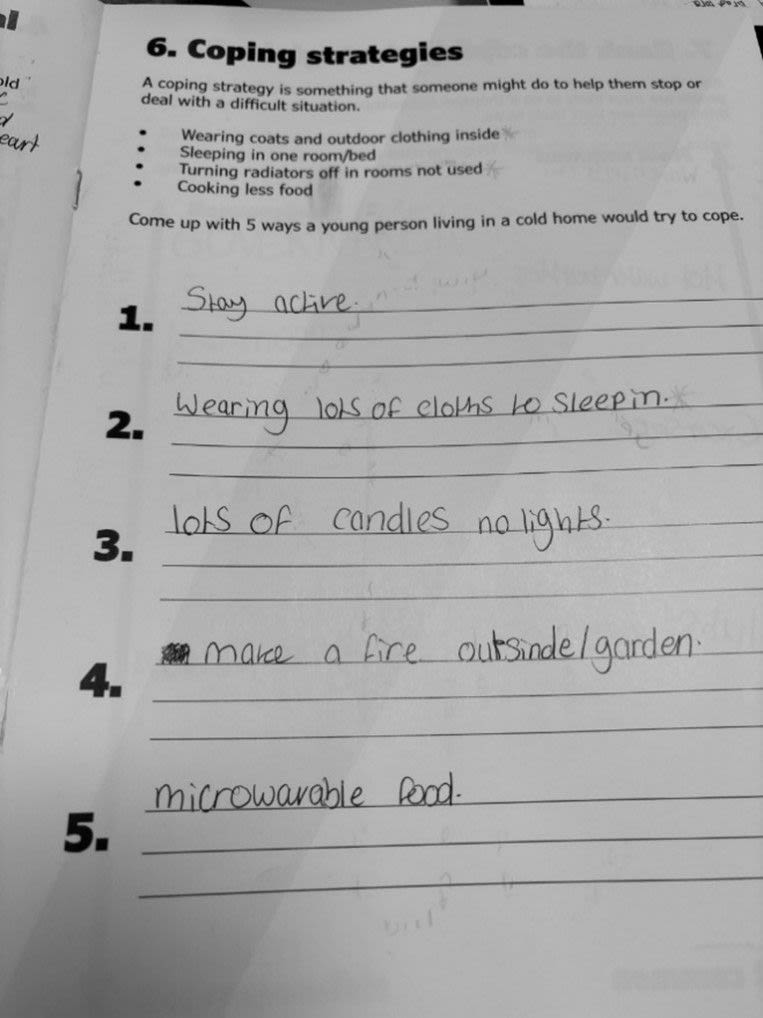
- A few suggested making fires or using log burners—an indicator of both the severity of cold they imagine and a misunderstanding of risk/safety.
- Difficulty staying warm while doing homework, relaxing, or sleeping.
- One pupil disclosed sleeping in mum’s bed after parental separation to save money, keeping curtains closed, and mould around the window. She was surprised that Ellie, a girl in the case study shared, wouldn’t tell school about her struggles - suggesting varied attitudes to disclosure, possibly shaped by trust in adults/schools. This also points to how, for many of these children, school functions as a place of safety and trust — often where they feel able to disclose what’s happening at home. As highlighted through our research with educators, this can also place additional pressure on schools, and strengthens the case for children and families being able to access further support through schools, as well as funding for staff who are managing issues that go beyond their core educational role.
- The coping strategies identified by students fall into three categories:
Practical, common strategies
- Layering clothes
- Wrapping in blankets
- Using hot water bottles
- Shutting curtains and doors
- Staying in bed
- Warm drinks
Avoidance-based strategies
Several students described avoiding home:
- Going to clubs or friends’ homes
- Staying out until late
- Using other people’s showers or heating
One Year 10 student was insistent that they spent as little time as possible at home.
This reflects children’s need for warmth, privacy, and social acceptance, and suggests that warm community spaces and after-school provision are critical supports.
Unsafe or concerning strategies
Multiple students mentioned:
- Making fires outdoors as a potential coping strategy
- Using lots of candles instead of lights
- Relying on one heated room with poor ventilation
- Severe rationing of heating
These insights underline why child‑led safety messaging is an essential next step to ensure children are not engaging in potentially dangerous activities as a means of keeping warm at home.
Students who said they do this at home described:
- Wearing coats and outdoor clothing inside
- Wearing lots of clothes to sleep in
- Turning radiators off in rooms not used
- Cooking less food
Strategies often trade off safety, social life, study time, and family cohesion. Their examples reveal both lived experiences (or observed experiences) and gaps in safe coping strategies—highlighting the need for child-appropriate messaging on safety and winter wellbeing.






What do children say causes fuel poverty?
They recognised some structural causes:
- Cost-of-living crisis
- Unemployment
- Single parenting
- Energy debt
Notably, they did not tend to blame individual failings or personal characteristics. Even young students intuitively understood social determinants of hardship.
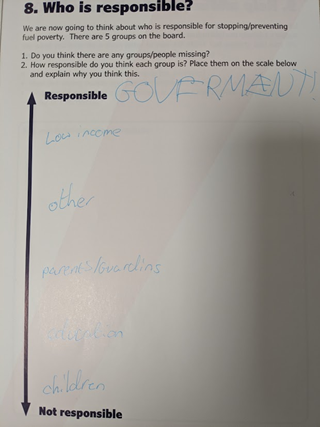
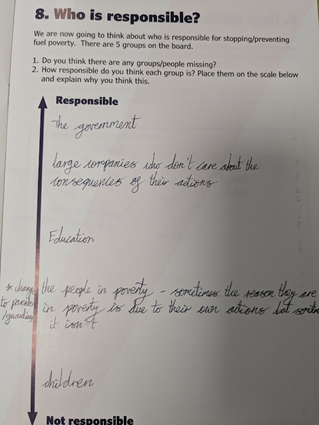
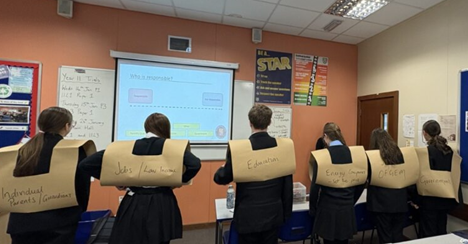
Responsibility: Who should address fuel poverty?
Education, attendance, and the future
Facilitators observed that students struggled to make the link between energy conditions and educational attainment without explicit prompting. This is a key finding for future outreach: children need help connecting the dots.
The ‘future’ section of the workbook was the hardest for pupils. When prompted, they identified:
- Future asthma or chronic illness
- Difficulty getting a job
- Inability to afford heating later in life
- Long-term mental health challenges
- Unstable housing
- Repeating family cycles
This suggests that children experience fuel poverty primarily as a day-to-day survival issue, not a long‑term pathway—an insight that can shape campaign messaging around protecting childhood rather than burdening children with future projections.
Many distanced themselves by implication - especially younger pupils who felt energy issues were adult responsibilities.
Children’s sense of who has responsibility
While initial agency felt low (‘bills are for adults’), guided discussion sparked questions about National Energy Action’s role, tariffs, EPCs. There’s clear latent curiosity if entry points are practical and concrete.
- Students were adamant that children are not responsible for addressing fuel poverty.
- They assigned most responsibility to government, Ofgem, and energy companies.
- Parents were seen as having some responsibility—but significantly less than formal institutions.
- They also spontaneously suggested employers as responsible actors for ensuring incomes keep pace with living costs.
Students overwhelmingly placed responsibility with:
- Government
- Energy companies
- Ofgem
- Employers
They consistently placed children last, with parents only mid‑range.
Students already hold a fairly accurate structural understanding; they intuitively locate solutions at systemic levels, not individual blame.
This strong structural perspective provides a compelling foundation for campaigns focused on systemic change rather than individual behaviour.
What children believe would make a difference
Current child empowerment appears limited, due to:
- Lack of knowledge about energy systems, bills, or rights.
- A belief that energy is an ‘adult domain.’
- Difficulty imagining concrete youth-driven actions.
Students struggled to project impacts into the future. Even with discussion about what’s needed for homework/revision (a warm, lit, quiet space; a charged device; internet), most didn’t make the link between energy and educational attainment.
However:
- They were engaged, curious, and asked thoughtful questions about National Energy Action’s work, tariffs, and EPCs - showing latent interest when invited in.
- Peer discussion helped them generate coping strategies, implying strong collective problem-solving potential. With the right framing, children could be empowered as advocates (e.g. savings at home, school energy actions, awareness campaigns), but currently see few entry points.
Students identified a wide range of support mechanisms, including:
- Advice and debt support (National Energy Action, charities)
- Food banks
- Trusted adults at school
- Warm meals
- Warm study spaces
- Improved insulation and draught-proofing
- Better income and jobs
- Help with boilers and radiators
Their suggestions reflect both immediate needs (warmth, food, hygiene) and structural needs (income, housing quality).
The insights strongly support a narrative that:
- Fuel poverty is not just about cold — it affects food, hygiene, belonging, confidence, and learning. It’s the backbone of childhood routines.
- Children experience fuel poverty through their bodies, emotions, social relationships, and school identity.
- Cold homes change what children eat, how clean they can feel, and whether they can face school.
- Young people recognise structural causes and want adults — especially government and companies — to act.
- Youth want to understand and take part when invited in. They ask sophisticated questions when given space.
- Fuel poverty affects children in ways they can describe - but often can’t imagine improving. Our campaign can close that empowerment gap.
The evidence reinforces the need for:
- Stronger minimum standards around damp and mould
- Safe, warm spaces in schools
- Energy debt protections
- Child‑focused support in warm home funding
- Better enforcement of housing quality
- Investment in insulation and low‑income home upgrades
- Making available financial support accessible to households with children
The evidence we have
Together, our Educators and Youth Insights for Change research provides a dual perspective on the impact of fuel poverty on children — one from the perspective of adults working closest to children, and the other from the children who are either living the reality themselves, or who have peers who are.
Viewed side by side, the insights:
- Corroborate each other’s evidence, with strong thematic alignment across cold homes, hunger, shame, illness, and disrupted learning.
- Strengthen causal understanding by showing how the same issues appear in children’s bodies, behaviours, emotions and school engagement.
- Expose shared insight across generations: teachers and young people independently describe the same harms and mechanisms.
- Reveal both visible and invisible impacts — educators describe what they observe; young people reveal what they hide.
They are not separate stories but two halves of the same narrative.
Cold homes disrupt every dimension of childhood
Educators describe children arriving tired, hungry, unwashed, in damp-smelling clothes, struggling to concentrate, withdrawn, and frequently ill. Young people describe cold homes as 'freezing', 'dark', 'run down', 'smelling of damp', with mould, lack of privacy, sleeping under blankets, staying in bed for warmth, and being too embarrassed to have friends over.
Both groups connect fuel poverty to:
- Physical health (coughs, asthma, chest infections, eczema flare-ups)
- Mental health (anxiety, worry, low confidence, embarrassment)
- Sleep disruption
- Ability to get ready for school
- Withdrawal from friendships and activities
- Shame and stigma
Both show that fuel poverty undermines learning and readiness to learn
Educators describe children falling asleep in lessons, unable to focus, dysregulated, behind academically, and absent due to illness or shame. Young people describe being tired, unable to concentrate, struggling with homework in cold homes, coming to school hungry, and missing school due to illness or bullying concerns.
Together, they form a clear causal chain:
Cold homes - tiredness/hunger - low concentration - dysregulation - stigma/illness - absence - falling behind.
Both reveal food, hygiene and dignity as central domains of impact
Educators repeatedly highlight food insecurity, lack of hot water, inability to wash clothes, and the emotional impact of arriving at school hungry or unkempt. Children describe not having enough food, eating only microwave/no‑cook meals, lacking clean clothes, worrying about smell, and being bullied or excluded.
The synergy shows that fuel poverty is not only about heating — it shapes:
- What children eat
- How they feel in their bodies
- How confident they feel socially
- How 'school ready' they can be
Both show schools as vital — but overstretched — safety nets
Educators describe providing food, warm spaces, clothing, hygiene items, and triage for family crises. Young people describe school as a warm, safe space — sometimes the only one.
The combination highlights:
- School is where children feel warm, fed, safe and supported
- But the system is relying on goodwill, not resourced infrastructure
- Young people instinctively turn to school, even if they don’t disclose openly
This alignment confirms that schools should be central partners in referral pathways and warm‑home policy.
Both expose systemic barriers: families want help but can’t access it
Educators highlight parental illiteracy, language barriers, stigma, digital exclusion, complex systems, slow repairs, and energy debt. Young people describe seeing parents stressed, in debt, crying, hiding problems, or making unsafe coping choices.
The reports reinforce that fuel poverty is not simply a financial issue — it is a systems navigation issue, and children experience the consequences viscerally.
Both identify the same structural causes and reject individual blame
Educators reference poverty, housing, energy bills, reduced services, cost-of-living pressures and welfare gaps. Young people reference the cost-of-living crisis, energy companies, government and employers.
Both groups locate responsibility with:
- Government
- Energy companies
- Landlords
- Regulators
- Local authorities
Neither group believes children or families are to blame.

The lessons we can draw from this:
Fuel poverty is a whole child issue, not a housing issue.
Children feel it in their bodies, emotions, friendships, school identity, and daily routines. Teachers see it in attendance, behaviour, clothing, work quality and pastoral need. Fuel poverty affects every domain of childhood.
Warm homes should be recognised as an educational necessity.
Our research shows direct and indirect impacts on concentration, attendance, attainment and wellbeing. Warmth should be understood as foundational to learning, just as nutrition and safeguarding already are.
Schools must be resourced as frontline referral points.
Both datasets show that children and families trust schools. They already serve as the bridge to fuel support, crisis funds and advice services. A national 'warm home referral pathway' through schools would meet children and their caregivers where they already seek help. Within this, schools should have adequate resourcing for safeguarding/pastoral/community liaison provision.
Children want adults and institutions — not themselves — to act.
Young people expect government, energy companies and regulators to take responsibility. Teachers agree change cannot lie with individual families or schools alone.
Messaging must reflect children’s lived vocabulary.
Children describe:
- Being cold in bed
- Stiff fingers
- Mouldy walls
- Embarrassment
- Bullying
- Bad smells
- Instant noodles
- Staying at friends’ houses
These vivid, child-led frames provide unignorable messages.
Young people are willing and able to engage — if invited in the right way.
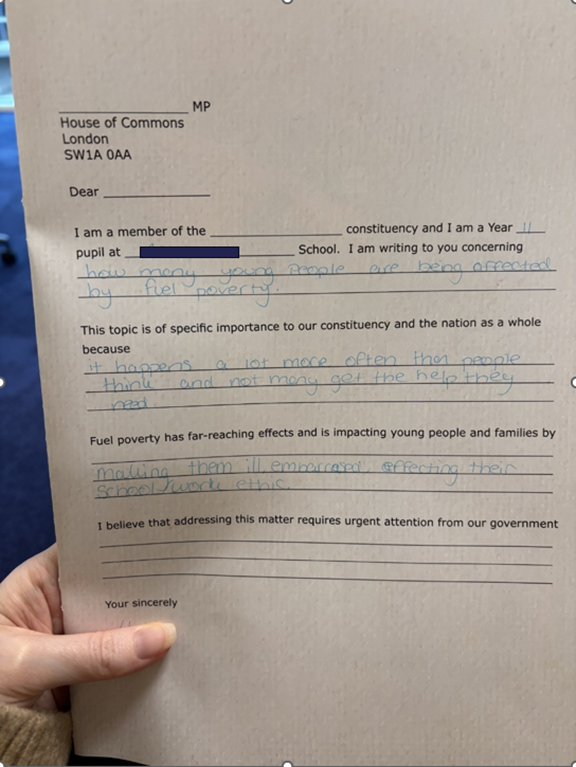
The youth insights show curiosity, systems understanding and appetite for explanation when guided. This suggests major opportunities for co‑creation, youth advocacy, and peer‑to‑peer energy justice work.
The evidence demands action across housing quality, income, school funding and energy regulation.
When read together, the reports point to a multi-layered set of solutions:
- Warm homes standards that prioritise children and damp/mould enforcement across tenures and all UK nations
- Child‑focused retrofit and insulation programmes
- Income support and energy debt protections, with tiered support for families with children
- Funded breakfast/warm spaces in schools
- Accessible crisis support and wraparound referrals through trusted settings
 Built with Shorthand